



- Home
- Process
From ore to bullion
The ore's journey through the plant, with the real equipment and parameters of each circuit.
Stages of the metallurgical process
-
Stage 1 of 5
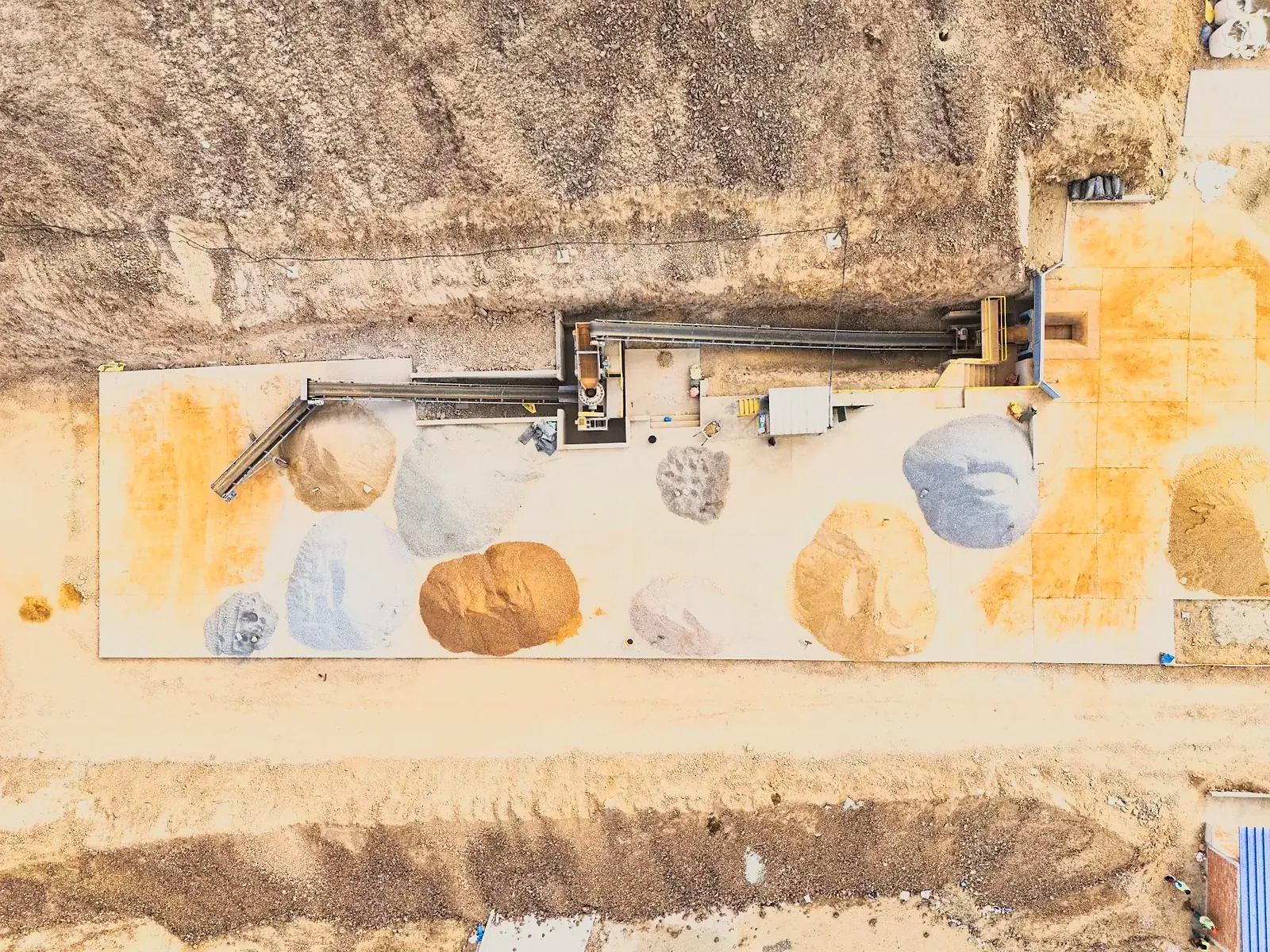
Reception and crushing
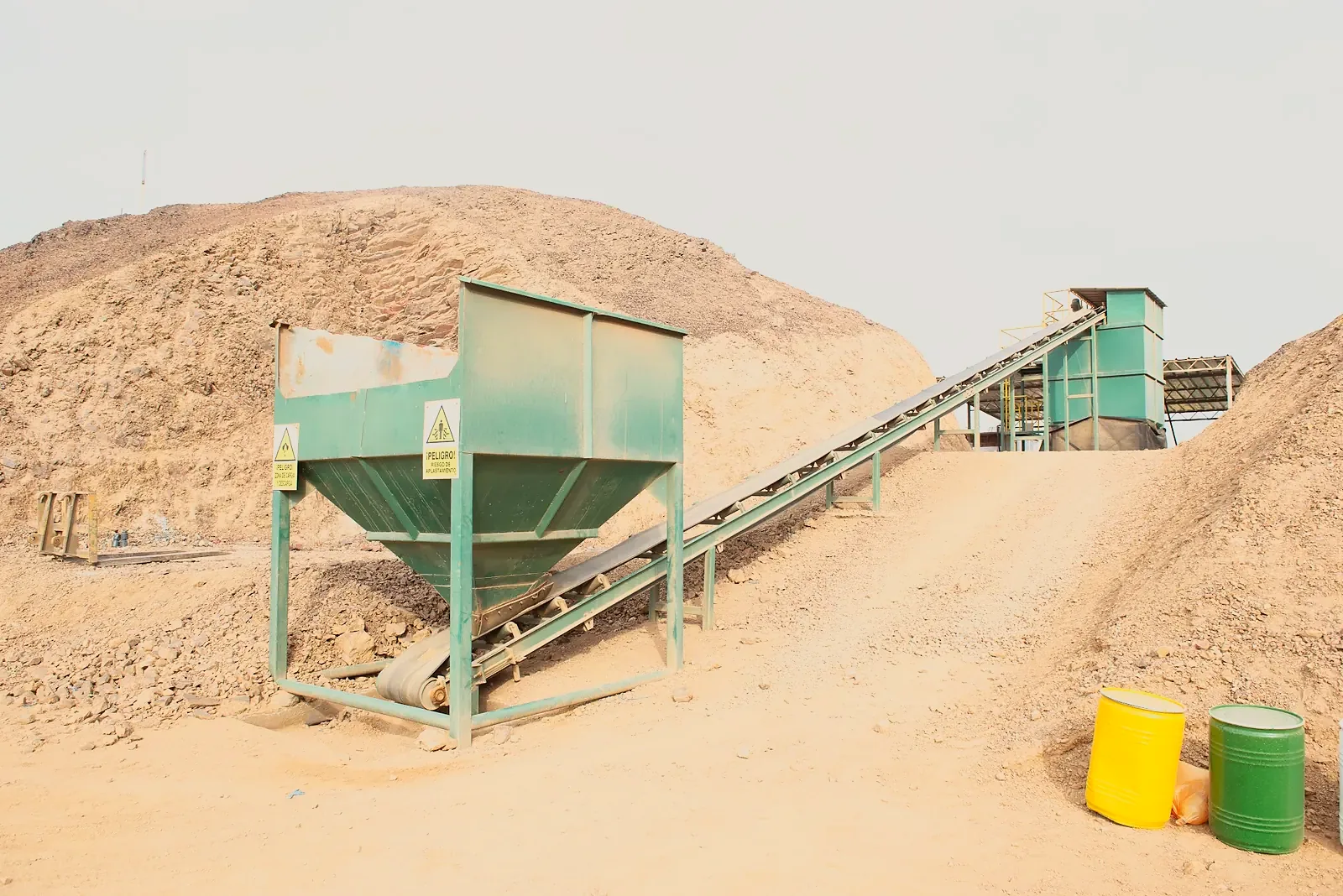
After weighing, each lot goes to its stockpile and from there to the coarse ore hopper. The jaw crusher and the cone crusher, with a screen between them, reduce the ore to 3/8 inch, the size needed for quartering.
- Rated throughput
- 30 t/h
- Coarse ore hopper
- 30 m³
- Primary crushing
- Jaw, 400 × 600
- Product
- 3/8", about 10 mm
-
Stage 2 of 5
Grinding
From the fine ore hopper, a conveyor feeds the ball mills, which work in closed circuit. The ore is ground to 100 mesh, and the fine samples of each lot are taken here.
- Fine ore hopper
- 100 t
- Ball mills
- 2, of 1500 × 3000 mm
- Motor and speed
- 75 kW, 27 rpm
- Particle size
- 100 mesh, 150 µm
-
Stage 3 of 5
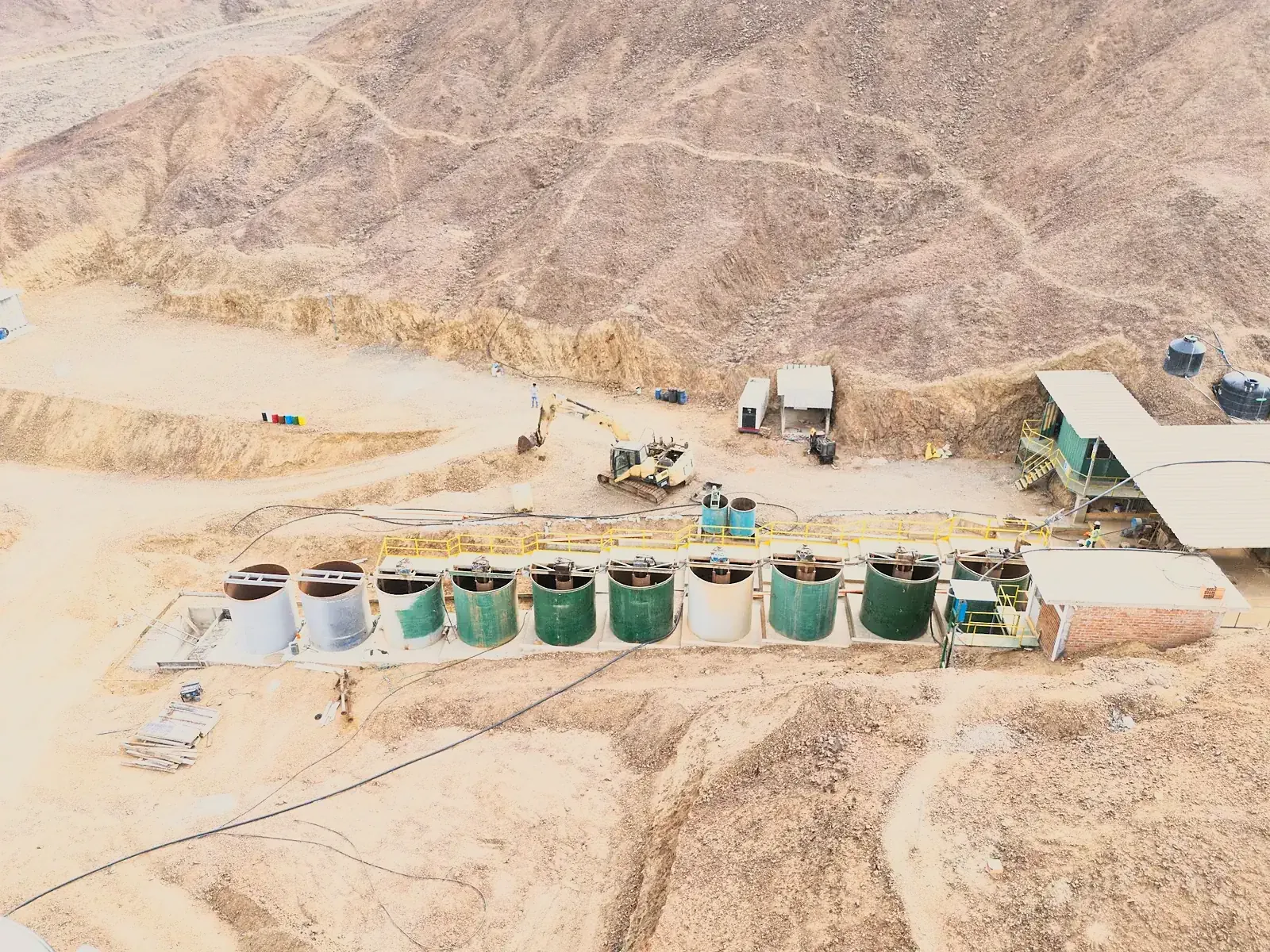
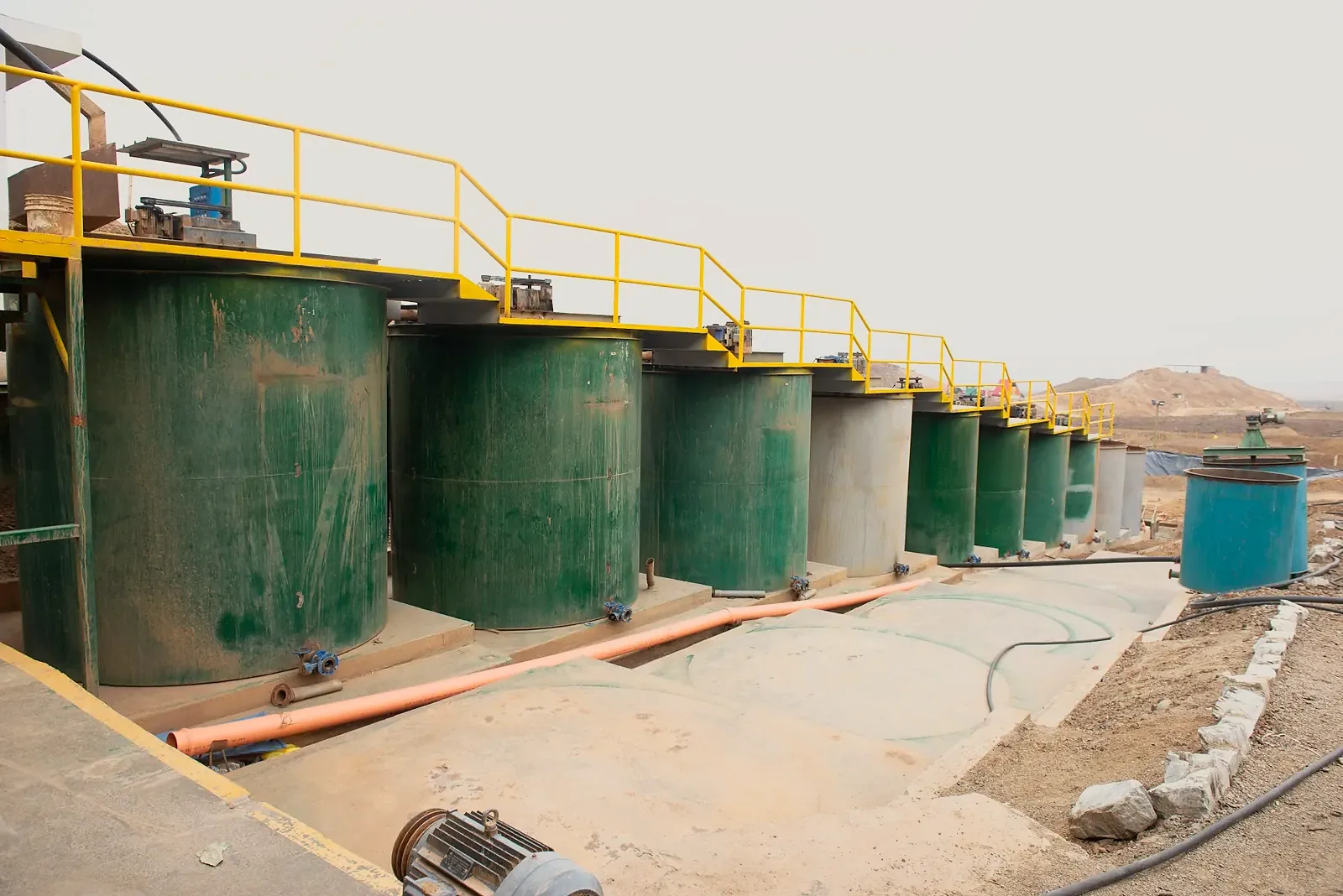
Carbon-in-leach (CIL)
A hydrocyclone classifies the pulp: the overflow, finer than 74 µm, goes to the thickener and the tanks. The cyanide solution dissolves the gold and silver, and the activated carbon adsorbs them.
- Capacity
- 40 t/day
- pH
- 10.5 to 11.0
- Cyanide (NaCN)
- 300 to 500 ppm
- Reagent control
- Every 2 hours
-
Stage 4 of 5
Desorption and electrowinning
The loaded carbon goes to the desorption column, where a caustic soda and cyanide solution releases the gold. The pregnant solution flows through the electrowinning cell and the gold is deposited on the cathodes. The carbon is regenerated in a rotary kiln and returns to the tanks.
- Desorption
- NaOH and NaCN
- Carbon
- Regenerated in a rotary kiln
-
Stage 5 of 5
Smelting and refining
The cathode deposit is melted in the furnace and poured into the ingot mould to obtain the plant's final product. The tailings go to the ponds.
- Product
- Gold bullion
Flow diagram
The complete circuit, from the ore stockpile to the bullion, with the points where material is recycled and where the tailings leave.
- Yard oreLot weighed and on its stockpile
- Primary and secondary crushing30 t/h, to 3/8 inch
- Fine ore hopper100 t
- Grinding100 mesh, 150 µm
- HydrocycloneThe overflow, finer than 74 µm, moves on; the coarse fraction returns to the mill
- Pulp thickenerFeeds the tanks
- Carbon-in-leach40 t/day, pH 10.5 to 11, with lime and cyanide; the tailings go to geomembrane-lined ponds
- DesorptionNaOH and NaCN; the carbon is regenerated in a rotary kiln and returns to the tanks
- ElectrowinningThe gold is deposited on the cathodes
- Smelting and refiningFinal product: gold bullion
Technical data
Equipment and parameters of each circuit, as installed.
Circuit
| Rated throughput | 30 t/h |
|---|---|
| Product for quartering | 3/8", about 10 mm |
| Efficiency | 95 % |
Coarse ore hopper
| Capacity | 30 m³ |
|---|---|
| Feeding method | Loader |
| Maximum feed size | 300 mm |
| Discharge method | Vibrating feeder |
Primary crushing
| Jaw crusher | 400 × 600 |
|---|---|
| Feeding method | Feed conveyor |
| Discharge setting | 25,4 mm |
| Discharge | Conveyor belt |
Secondary crushing
| Gyratory cone crusher | 600 mm |
|---|---|
| Feeding method | Vibrating screen |
| Fine product discharge | Conveyor to the fine ore hopper |
Fine ore hopper
| Capacity | 100 t |
|---|---|
| Feed | Conveyor from secondary crushing |
| Discharge | Conveyor to the grinding circuit |
Grinding line
| Operation | 30 days, 24 h in 2 shifts |
|---|---|
| Average throughput | 4.4 t/h |
| Output particle size | 100 mesh, 150 µm |
Closed grinding circuit
| Number of mills | 2 |
|---|---|
| Mill type | Ball, overflow discharge |
| Mill size (d × l) | 1500 × 3000 mm |
| Motor power | 75 kW |
| Mill speed | 27 rpm |
| Ball charge weight | 7.5 t |
| Capacity | 2 to 5 t/h |
| Mill weight | 15.6 t |
Sampling after the mill
| Sample splitting | Into three equal parts |
|---|---|
| Plant laboratory results | In 10 h, depending on workload |
Classification
| Equipment | Hydrocyclone |
|---|---|
| Overflow to leaching | Finer than 74 µm (200 mesh) |
| Thickening | Pulp thickener |
Carbon-in-leach circuit
| Capacity | 40 t/day |
|---|---|
| Number of tanks | 16 |
| Diameter and height | 3000 × 3000 mm |
| Agitation type | Twin impeller, 12 kW |
| pH | 10.5 to 11.0 |
| Sodium cyanide (NaCN) | 300 to 500 ppm |
Control
| Lime and cyanide dosing and control | Every 2 hours |
|---|---|
| Pulp sampling | Every 30 min and every 2 h |
| Analysis | Au and Ag in solution and on carbon |
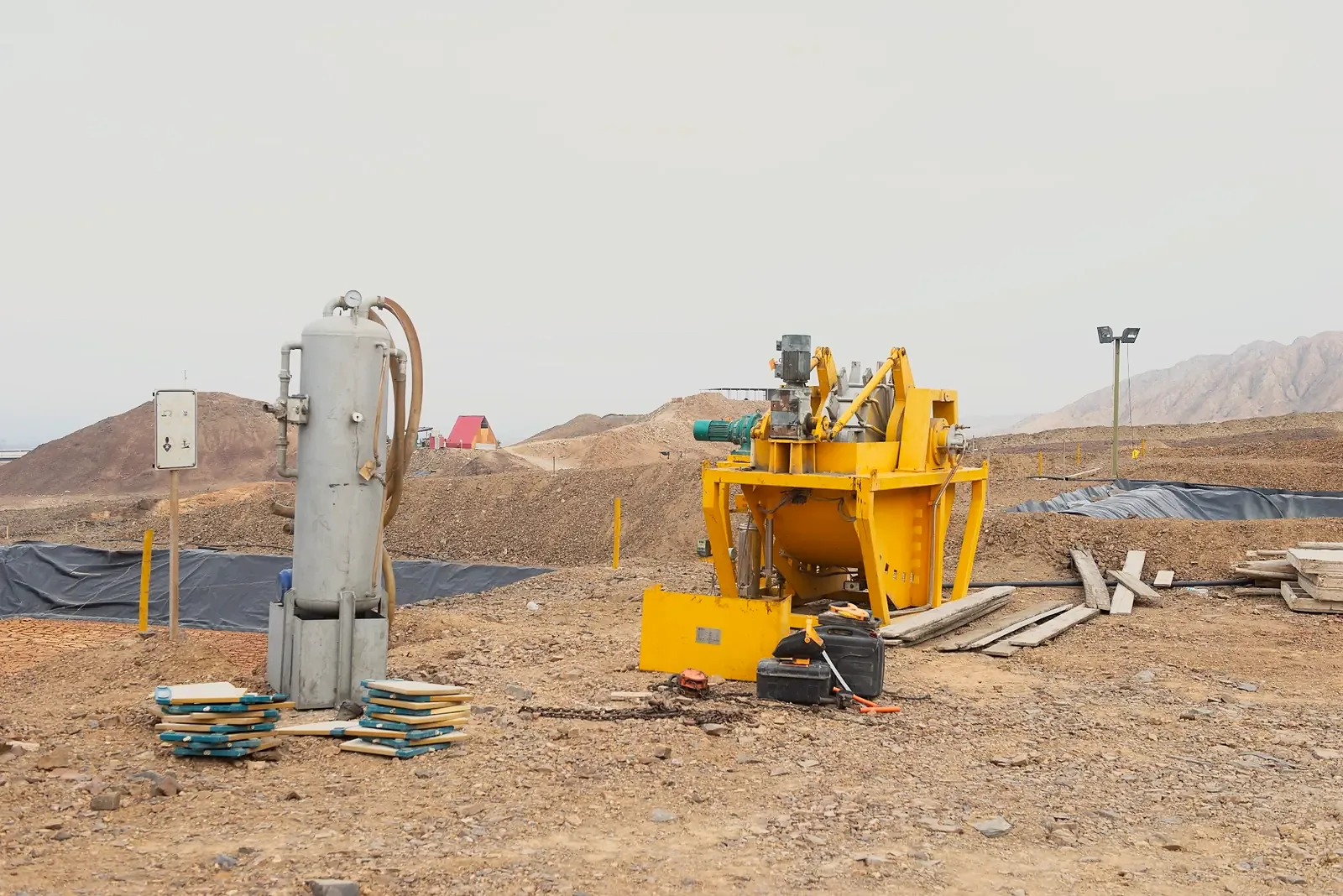
Gold recovery
| Carbon desorption | NaOH and NaCN solution |
|---|---|
| Electrodeposition | Electrowinning cell |
| Carbon regeneration | Rotary kiln |
| Smelting and refining | Furnace and ingot mould |
| Final product | Gold bullion |
Tailings
| Disposal | Geomembrane ponds |
|---|
How we measure the grade of each lot
Quartering, the three samples and controlled grade blending are explained step by step on the sampling page.